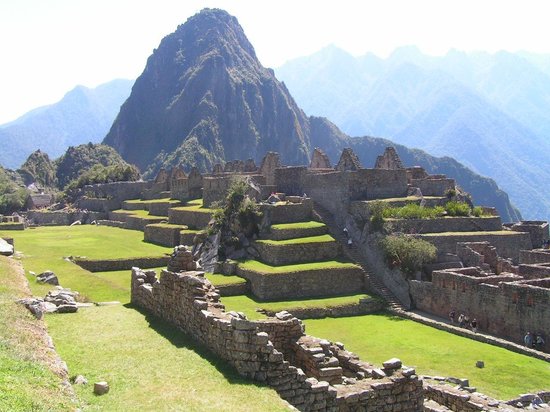
Machu Picchu, the Inca marvel discovered to
the world

Machu Picchu (Quechua Machu pikchu,
"Old Mountain") is the name of a llaqta or ancient Andean town built
in the mid fifteenth century in the rocky promontory that links the Machu
Picchu and Huayna Picchu in the eastern slopes of the Cordillera Central,
southern Peru and 2490 m, altitude of the main square.

In XVI century documents, it is indicated
that Machu Picchu would have been one of the residences rest of Pachacutec, the
ninth Inca Tahuantinsuyo between 1438 and 1470. The finest buildings and
ceremonial character of the main access road to demonstrate that was llaqta
used as a religious sanctuary. Both uses, the palace and the temple, it would
have been incompatible. Military character which connotes the adjectives of
"strength" or "citadel" is not justified.

Machu Picchu is both a masterpiece
of architecture and engineering. Its unique architectural features and
landscaping, and the veil of mystery surrounding it have become one of the most
popular tourist destinations on the planet.
Machu Picchu is on the List of World
Heritage of UNESCO since 1983 as part of a cultural and ecological set called
Historic Sanctuary of Machu Picchu. The July 7, 2007 Machu Picchu was declared
one of the new seven wonders of the modern world in a ceremony in Lisbon,
Portugal.
The definition of Unesco is:
“Located 2,430 meters high in a place of great beauty,
in the middle of a tropical mountain forest, the sanctuary of Machu Picchu was
probably the most amazing urban creation of the Inca Empire at its height. Its
walls, terraces and ramps seem gigantic being carved in the rock cliffs, as if
they were part of it. The natural setting, on the eastern slope of the Andes,
is part of the upper Amazon basin, which has a varied flora and fauna”.
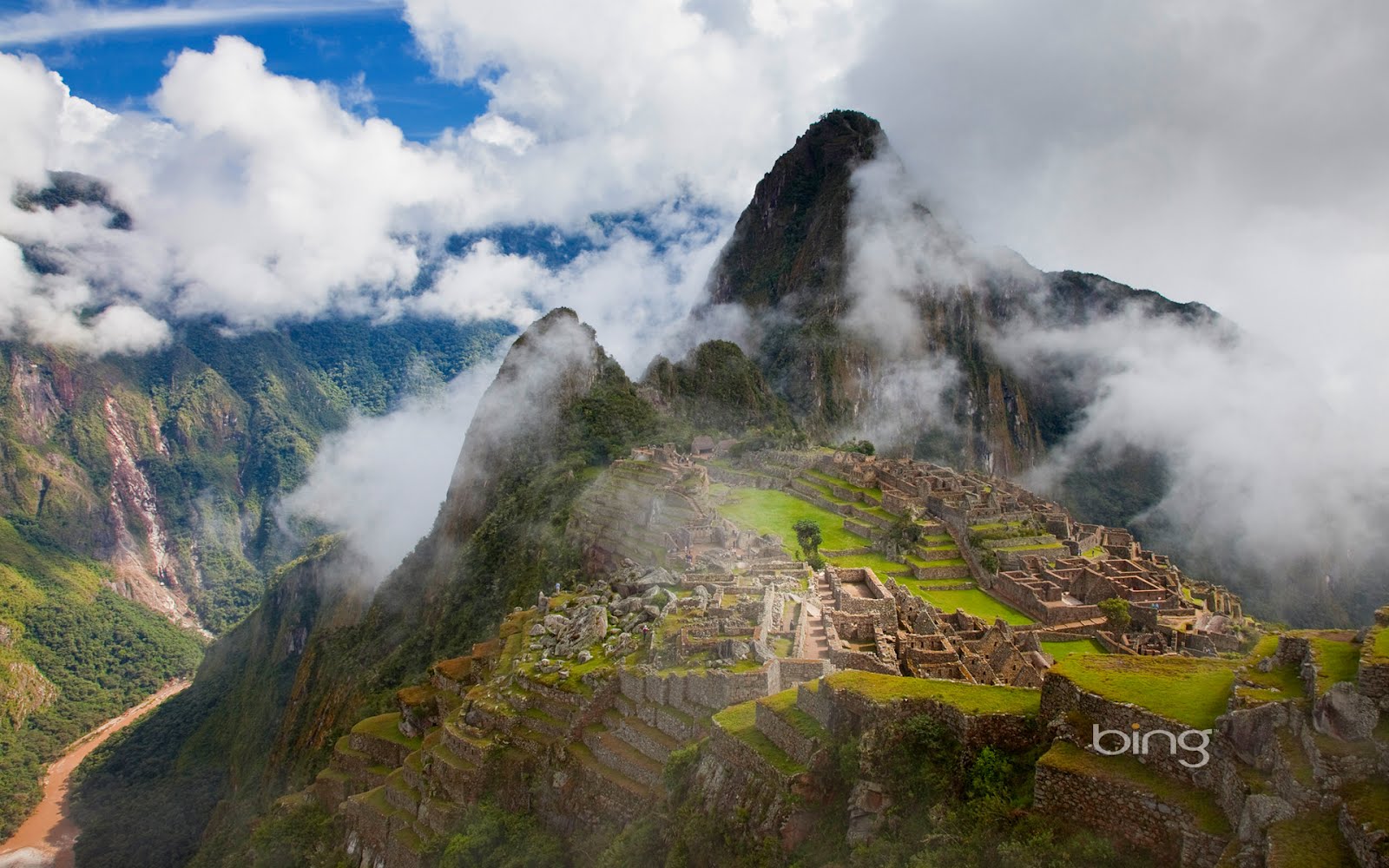
Photo Unesco
The origin is uncertain. Some
attribute it to Pachacutec (1438-1470); others argue that Huiracocha Inca
ordered the construction of this world wonder (years 1380-1400). It is believed
that his poblaciónestaba formed by inhabitants of the elite (the panaca of
Pachacutec) and acllas. The agricultural labor force consisted of mitimaes or
mitmas settlers (mitmaqkuna) from different corners of the empire.
In 1865, the Italian naturalist
Antonio Raimondi passed near the ruins without knowing it. It is also assumed
in those years, the area begins to receive visits by interests different from
the scientists. Treasure predation had begun. In 1867, the German Augusto Berns
not only have "discovered" the ruins but founded a “mining company
" to exploit the alleged "treasures" that lodged (Explotadora
Company Limited of the Temples of the Inca). Between 1867 and 1870 and with the
approval of the government of Jose Balta, the company operated in the area and
sold "everything found" to European and American collectors.
At that time maps listed mineral
exploration and Machu Picchu. In 1870, the American Harry Singer first recorded
on a map of Cerro Machu Picchu and Huayna Picchu referred to as "Punta
Huaca del Inca". The name reveals an unusual relationship between the
Incas and the mountain and even suggests a religious character (one huaca in
the Ancient Andes was a sacred place). A second map of 1874, prepared by the
German Herman Gohring, mentions and locates in its exact site both mountains.
In 1880 the French explorer Charles Wiener confirmed the existence of
archaeological remains in place.

The first direct references on
visitors of the ruins of Machu Picchu indicate that Agustín Lizárraga, Cuzco
farmer, arrived July 14, 1902 leading the visitors, who left graffiti with
their names on one of the walls of the Temple of the Three Windows. One of the
graffiti read "Agustin Lizarraga July 14 - 1902", which shows that
Lizarraga had discovered Machu Picchu before Bingham, but this is not an unfair
gesture gave him credit.
Hiram Bingham (November 19, 1875 - 6
of June 1956) was an explorer and politician United States. He was a professor
at Yale when he led an exploration of the South America, where by indications from
Lizarraga, rediscovered Machu Picchu.


The discovery took time and money,
because he found the ruins after two expeditions. Bingham took fifty thousand
archaeological pieces of Machu Picchu to Yale University. A few years ago some
of them returned but the destination is uncertain Peru existing public
corruption. Perhaps it would have been better off staying at Yale.

Hiram Bingham found irrefutable
proof of a previous expedition, and sent delete arguing conservation reasons.
He recorded the fact in their travel diaries but "forgot" to point
this out in his book "The Lost City of the Incas" published in 1948,
which was presented to the world as the sole discoverer of Machu Picchu.

In Photo: Sergeant Carrasco and
Pablito Richarte, the child who led Bingham to the ruins (Detail shot of Hiram
Bingham's July 24, 1911)


Agustin Lizarraga could not get the
recognition he deserved for his prowess, nor their descendants have achieved
since the "scientific discoverer" remains the center of attention,
despite being officially considered second visitor to the ruins. Winston
Churchill said "history is written by the victors," or in this case,
the erase and rewrite on it.
Bingham handled the auspices of Yale
University, the National Geographic Society and the Peruvian government to
initiate the scientific study of the site, conducting archaeological
excavations between 1912 and 1915, a period in which the brush is cleared and
Inca tombs were excavated in the outskirts from the city. The "public
life" of Machu Picchu begins in 1913 with the publication of an article in
the journal of the National Geographic.
Although Bingham is questioned his
lack of ethics, he had the distinction of being the first person to recognize
the importance of the ruins, studying them with a multidisciplinary team and
reporting their findings. Is in doubt the scientific approach, reflected in the
irregular departure of excavated archaeological material, at least some 46,332
pieces. In any case it was a well planned "scientific plundering". In
March 2011 these pieces began to be returned to Peru.
Besides archeology, Martin Chambi, a
noted Peruvian photographer, accompanied by Juan Figueroa, between 1924 and
1928 took a series of photographs of Machu Picchu that were published in
different Peruvian magazines, massifying local interest on the ruins and
turning them into a symbol national. It can be considered a discovery through
the image.


Thereafter, the facts that have
transformed Machu Picchu on a global appeal, happened quickly. In 1948 a dirt
road that climbed the mountain slope to the ruins from the train station was
created; in 1981 the ecological protection zone around the ruins is created; in
1983 it happens to be a member of the World Heritage List.


Teo Allain Chambi,
photographer and grandson, he says "My grandfather respected Machu Picchu
by their remoteness and majesty."

REFERENCES
Machu Picchu
Santuario
histórico e Machi Picchu
http://whc.unesco.org/es/list/274#top
Quien
descubrió Machupicchu?
FOTOS: Machu Picchu a través de los ojos del maestro
Martín Chambi
Martin Chambi Jimenez
https://es.wikipedia.org/wiki/Mart%C3%ADn_Chambi_Jim%C3%A9nez